History

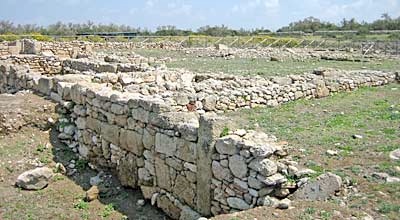
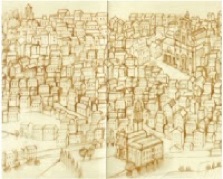
For Modica it was the Chiaramonte family who were the greatest of the counts. A relatively enlightened system of feudalism gave the serfs a piece of land that they could call their own, unlike in the rest of the island where the natives were slave labour for the Spanish overlords. This enfiteusi - the granting of land, not on short term contracts, but for a family to run and even leave to their heirs, gave the county of Modica a headstart in civil liberties as well as a commercial mindset that still exists to this day.
The Chiaramonte were dispossessed and the Cabreras came to power. Now the Cabrera name exists for the imposing tower on the beach at Pozzallo, but they ruled the county of Modica for 150 years,before the Colonna family moved in. At the turn of the 1600s the County was ruled by a widow, as regent, for her son and she founded the city of Vittoria more as a means to make some money than leaving her stamp on the county.
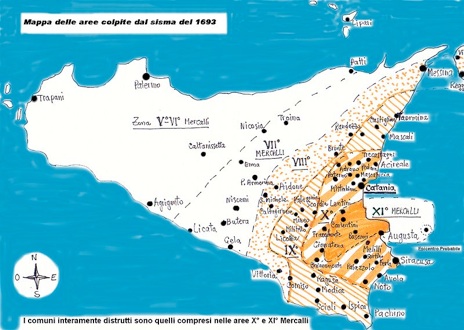
It was the catalyst that created the ‘new’ Ragusashire. Ragusa itself was rebuilt on a neighbouring hill, much against the barons wishes. Modica, Scicli, Chiaramonte, Acate, Comiso were all rebuilt in a hurry in the latest Baroque style. It is strange how as the baroque was becoming old fashioned in the north of Europe, Sicily welcomed it with open arms, and making it even more baroque, with the typical Sicilian effusion of emotions that it became possibly the greatest final fling of an architectural style that the world had yet seen.
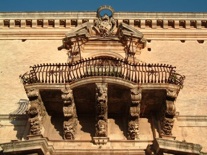
Throughout the early 1700s the cities rose from the ashes, greater and grander than before, leaving Carlo Borbone, the new King of the House of Bourbon, a greater legacy that he could have imagined. Subsumed into the Kingdom of the Two Sicilies, the island itself was being neglected and forgotten as Naples became the glittering center of the court. A brief change in ruler to the Savoia brought some long needed reforms, before the island reverted to the Borbone. Again Sicily was being used as a granary for the occupying power, and nothing was to change until Garibaldi landed at Messina in 1860 and declared Sicily part of a united Italy.
The unification of Italy did very little for Sicily, and still less for the south east of the island. Promises of agrarian reform came to nothing, and for the peasants who worked on the land, a united Italy brought only the further duty to be available for military service / something which Sicilians have always avoided if at all possible. Perhaps the Sicilian could see, even 1000 years ago, that he was being used as cannon fodder for other peoples arguments, and little changed until WW2.
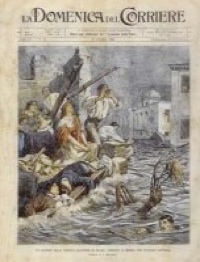
By the turn of the 20th century Modica was prosperous, Modica itself was called the Venice of the South with its rivers and bridges running through streets of gracious palazzi. Scicli was the same, and both suffered in the great flood of 1902 which washed away the greater part of the lower towns.
The grand tours undertaken by wealthy foreigners throughout the 18th and 19th century had had their obligatory stops at Etna, and Agrigento, but also at the Cava d-Ispica where they marveled at the early Christian catacombs and troglodyte existence of the citizens of Spaccaforno as it was then called. Siracusa had slumped into a state of squalour, and the city of Modica was now the third city of Sicily, though some would helped by the earthquake which leveled Messina in 1901.
The province of Ragusa was born and suffered in the second world war. After the surrender of Italy, the Americans bolstered the Mafia presence in Sicily, but fortunately the mafia had never made headway in the south east except for isolated pockets near Noto and Pachino, and Ragusashire carried on as before, with an eye on commercial development. The agrarian reforms broke up the huge estates, which meant that farmers couldgrown something other than wheat, and the province became a natural home for soft fruits, the cherry tomato was invented in Pachino in 1953, and agriculture became a sound basis for business.
As in most parts of Italy, the migration was towards the towns, which led to some unedifying developments in the 1960s and 1970s when speculation and the political system allowed easy money to be made by those with contacts in the right places. However, despite the politicians, the Ragusani have always maintained a contact with their countryside, it is one of the few places where families live in the country and commute to work, much like the UK. Old habits die hard, and every family has a little plot of land to grow olives or grapes. It is this that has kept the countryside alive, even though for some people there is too much cement being mixed.